If you visit a general practitioner complaining of unshakeable exhaustion, the standard response is often a prescription for antidepressants or advice to improve sleep hygiene. For the millions suffering from Myalgic Encephalomyelitis/Chronic Fatigue Syndrome (ME/CFS), this approach is both ineffective and demoralizing.
The prevailing medical narrative often treats fatigue as a symptom to be managed. However, a growing body of evidence suggests we should view it as a systemic hardware failure. The recovery of patient Fiona Symington highlights that the issue is not necessarily a lack of energy; instead, it is a dysregulated autonomic nervous system stuck in a chronic threat response. The solution is not a pill but a physiological hard reset.
Understanding the Locked “Fight or Flight” Response
Fiona Symington’s case illustrates the devastating reality of autonomic dysfunction. Sick since age 11, Fiona spent over two decades trapped in a cycle of physiological collapse.
- The Clinical Picture: Her condition went beyond tiredness; it was a state of high allostatic load where the body perceives everyday stimuli as mortal threats.
- The Reality: A holiday trip once left her shaking on an airport floor and unable to move. Even gentle exertion would trigger Post-Exertional Malaise (PEM) and crash her system for days.
- The Diagnosis Gap: Despite her symptoms, she faced the common medical dismissal that nothing was wrong with her. This ignores the underlying biology of a nervous system locked in sympathetic overdrive.
Resetting the Autonomic System via the Vagus Nerve
Fiona’s recovery began when she shifted her focus from treating symptoms to retraining her nervous system. Cold water immersion became a cornerstone of this brain retraining.
The answer to why cold water helps an exhausted body lies in the Vagus Nerve. This nerve is the main highway of the parasympathetic nervous system, which handles the “rest and digest” mode. In patients with chronic fatigue, this system is often dormant while the stress response is stuck in the active position.
Imagine a house alarm that is glitching and ringing at full volume 24/7. You cannot sleep or work because the alarm is blaring. Medications might act like earplugs by dampening the noise, but they do not stop the alarm. Cold water acts as a hard reboot for the security system. The shock of the cold forces the brain to divert attention to the immediate thermal stimulus, effectively snapping the glitchy alarm out of its loop and allowing the system to reset to baseline.
Biology of Recovery: Reducing Inflammation and Boosting Energy
Fiona’s personal success aligns with broader physiological data regarding cold exposure and inflammation.
- Dampening Inflammation: Chronic fatigue is often linked to systemic inflammation; cold water acts as a systemic vasoconstrictor to flush metabolic waste and reduce edema.
- Cytokine Modulation: Recent reviews indicate that the combination of cold exposure and breathwork can significantly decrease pro-inflammatory cytokines like IL-6.
- Mitochondrial Resuscitation: Emerging research suggests cold exposure stimulates mitochondrial biogenesis. This process upgrades the cellular batteries that were previously failing to generate energy.
Implementing the “Symington Reset” Safely
For those suffering from fatigue or autoimmune issues, the “more is better” approach is dangerous. The goal is to signal safety rather than adding more stress.
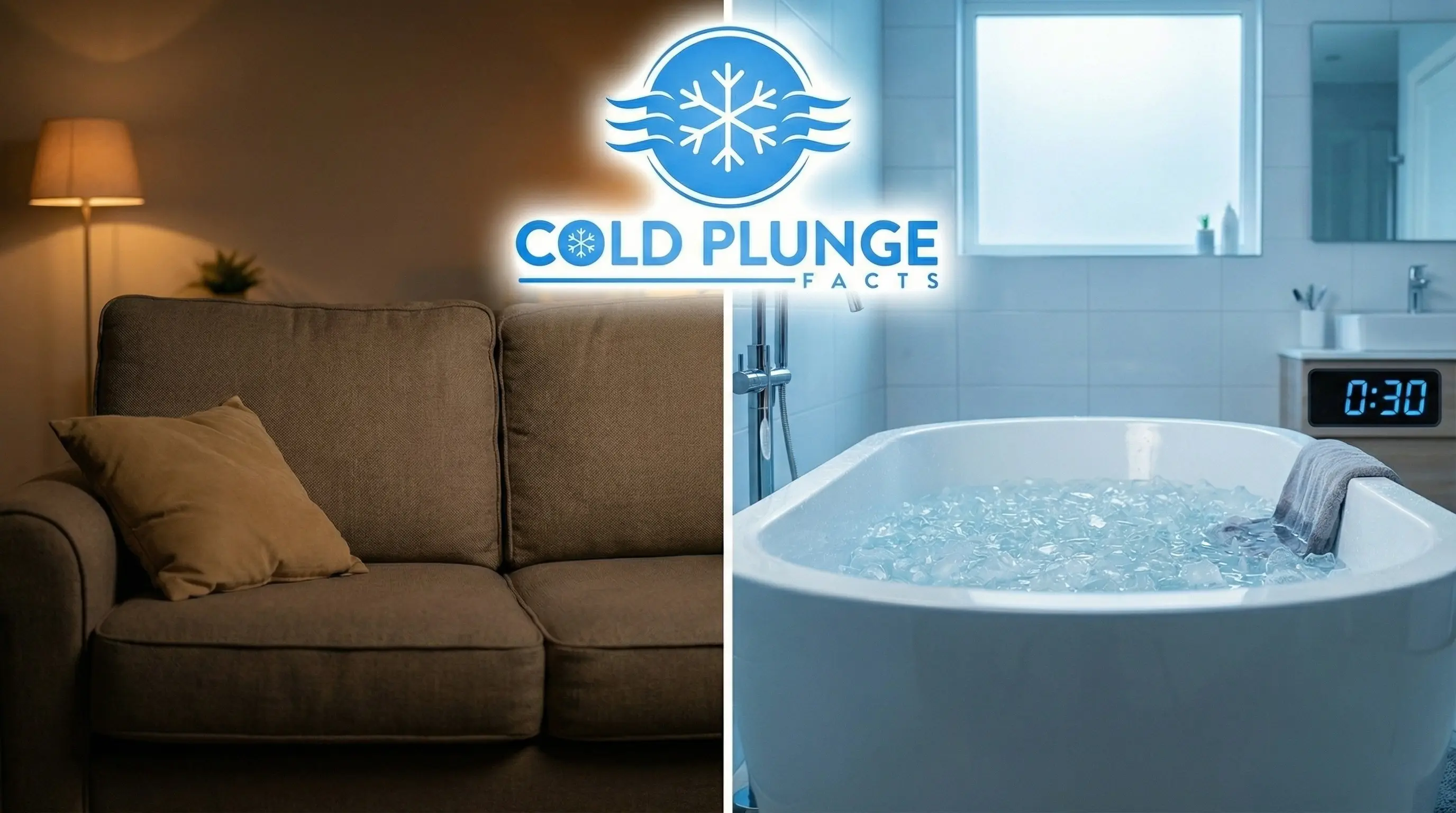
- Temperature: Start warm at roughly 60°F (15°C). Patients with ME/CFS often have high cold sensitivity, so plunging into freezing water immediately can cause a crash.
- Duration: Utilize micro-dosing for approximately 30 seconds. Success comes from convincing the nervous system it is safe rather than trying to conquer it.
- Frequency: Consistency is essential. Daily exposure is required to retrain the brain’s threat detection system through neuroplasticity.
From Physiological Collapse to NHS Employment
Today, the woman who once could not pull herself out of a swimming pool works full-time for the NHS and hikes symptom-free. Her recovery was not a pharmaceutical miracle but a physiological adaptation. Fiona’s story serves as a powerful proof of concept: “Incurable” often simply means “incurable by standard medication.” By addressing the root cause of a nervous system on fire, she utilized cold water to extinguish the flame and reclaim her biology.