



Beyond the Gym
For most people, an ice bath looks like something purely for elite athletes—a way to punish the body after a hard workout to build muscle. But this view is too narrow. The most powerful medical use for cold water might not be building muscle at all; it might be fixing the nervous system.
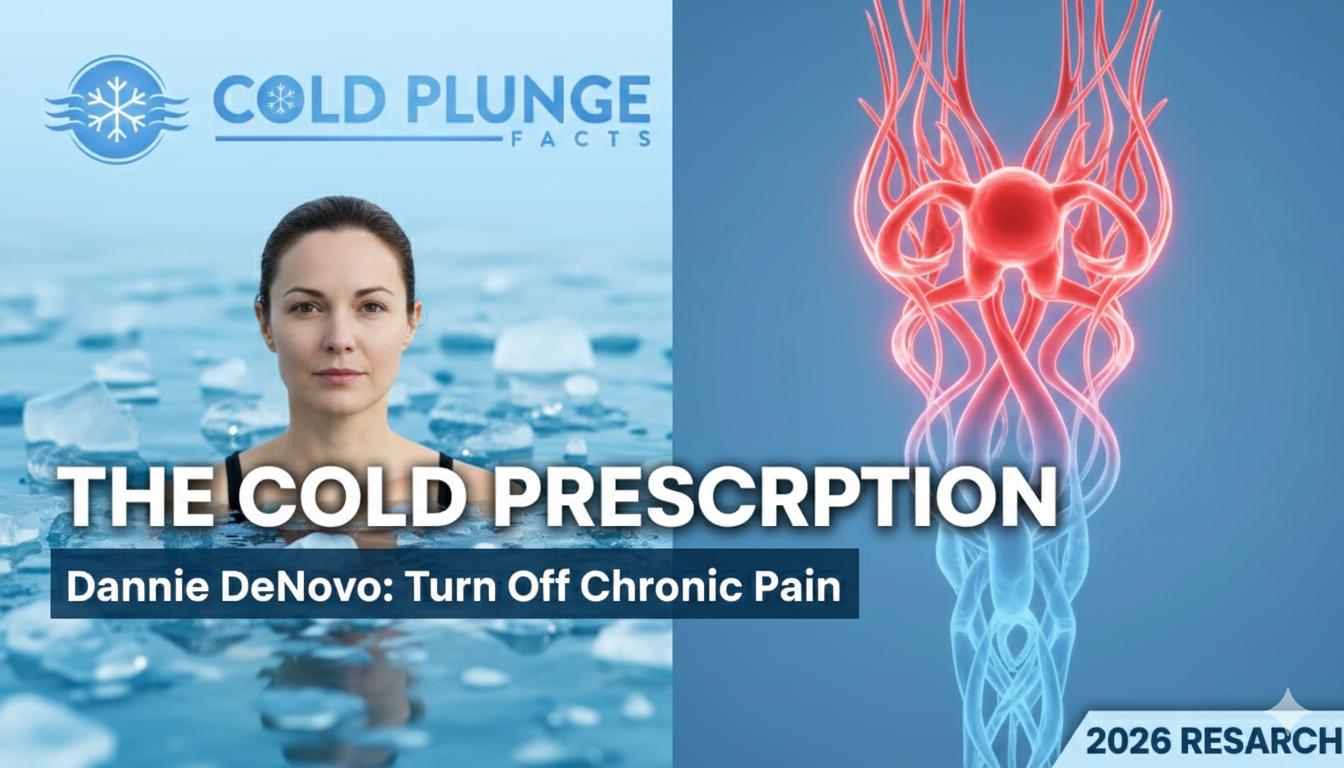
While “bio-hackers” chase dopamine rushes, a new wave of longevity science is looking at cold water as a way to break chronic pain loops. The compelling story of Dannie DeNovo, a patient who reversed debilitating nerve pain after surgery, reveals a crucial truth: controlled cold exposure acts like a natural anesthetic, working on both your blood vessels and your nerves at the same time.
The Problem: Dannie’s “Inflammatory Storm”
To understand the solution, we have to look at the reality of Dannie’s condition before the cold. Following surgery, she wasn’t just “sore”—her body was stuck in an aggressive “inflammatory storm.”
Her lower back injury had triggered a cascade of immune responses that created three major problems:
- Extreme Sensitivity: Her nerve endings were so damaged that even small movements felt agonizing.
- Immobility: The pain was so severe that Dannie could not walk; she was forced to crawl to move around her own home.
- Drug Resistance: Standard painkillers were not an option due to her medical history. She was trapped in a high-stress state with no pharmacological way out.
The Mechanism: Closing the “Pain Highway”
Why did cold water fix pain that medicine struggled to mask? The answer lies in how the cold physically alters our biology.
The Analogy: Imagine your nervous system is a highway, and Dannie’s pain signals were thousands of cars honking their horns. Taking a painkiller is like putting on noise-canceling headphones—the traffic is still there, you just hear it less. Cold water, however, effectively closes the on-ramps. It physically narrows the road (constricting blood vessels) and slows down the speed limit (slowing nerve conduction). The pain signals simply cannot reach the brain as fast or as loud.
The Evidence: The DeNovo Protocol
Analyzed by regenerative orthopedics specialist Dr. Peter Michael, Dannie’s recovery serves as a perfect N=1 case study in “graded exposure.”
- The Baseline: Dannie started with zero tolerance for cold; the idea of an ice bath was terrifying.
- The Intervention: She committed to daily dips in water between 50°F and 55°F.
- The Result: Dr. Michael noted that the cold acted as a “biological anesthetic.” By constricting her blood vessels, the cold forced out the inflammatory fluid, causing her swelling. Simultaneously, the intense sensation of the cold overwhelmed her nerves, blocking the pain signals (a process known as the Gate Control Theory).
- The Outcome: Dannie went from crawling across her floor to lifting her child and traveling comfortably, all without relying on opioids.
The Protocol: How to replicate her
If you are using cold water for pain relief, the goal is not to be a hero; it is to find relief without shocking your system. Dannie’s approach prioritized consistency over intensity.
- Temperature:55°F – 60°F (12°C – 15°C).
- Note: You do not need freezing water. As Dannie discovered, moderate cold is enough to fight inflammation without shocking a sensitive nervous system.
- Duration:1 to 2 minutes.
- The goal is the “minimum effective dose.” You want to trigger the blood vessels to constrict, not freeze the body.
- Frequency: Daily during flare-ups; 3-4 times a week for maintenance.
The “After”: Long-Term Protection
Dannie’s story highlights a benefit that goes beyond just stopping pain for the day. By using Cold Water Immersion (CWI) regularly, she lowered her baseline for inflammation.
Chronic inflammation is a primary driver of aging and disease. By managing pain with cold water instead of relying solely on heavy medication, Dannie not only restored her quality of life but likely improved her long-term cellular health. Cold water served not just as a remedy, but as a reset button for her body’s healing architecture.


